


-
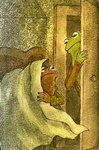
Dragons and Giants and The Dream from Frog and Toad Together (1971) by Arnold Lobel
Peter Shea
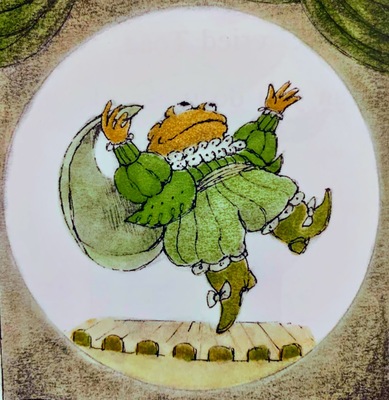
In Arnold Lobel’s classic story “Dragons and Giants,” Frog and Toad read a book about knights fighting dragons and giants and then measure themselves against those heroes, asking, “Are we brave?” Societies all over the world show children images of martial bravery from early on and then, at about age 18, draft them into the military to act out those ideals. In “The Dream” Toad dreams that a voice praises him as he performs on a stage while his friend Frog, applauding in the audience, keeps shrinking. But Toad can wake up from this dream and realize the expectations of excellence urged on him by “the Voice” are optional. He can decide to be an ordinary Toad and spend a “fine long day” with his friend. Our great privilege, as adults talking seriously with children, is that we can help them notice the ways they are being urged and jollied along into a system that is not friendly to them.
-
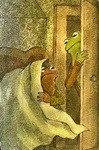
Dragons and Giants from Frog and Toad Together (1971) by Arnold Lobel
Gareth B. Matthews
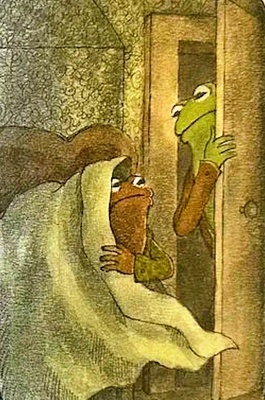
Every story in Arnold Lobel's remarkable collection Frog and Toad Together exemplifies a trait I have called "philosophical whimsy"—humor that prods us readers to reflect on some philosophically interesting issue. In "Dragons and Giants," the humor begins when Frog and Toad look in a mirror to see if they are brave. Bravery is as difficult to be perfectly clear about as it is hard to ignore or devalue. It has puzzled and intrigued philosophers from Plato down to the present day. Children are admonished from a very young age to be brave. Blessed is the adult who invites, recognizes, and values the fresh insights that a young child can bring to the consideration of what bravery really is. And blessed is the child who is invited to follow up those natural chuckles over Frog's and Toad's exploits with some of their ruminations that this delightful story provokes.
-
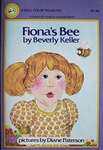
Fiona’s Bee (1975) by Beverly Keller
Gareth B. Matthews
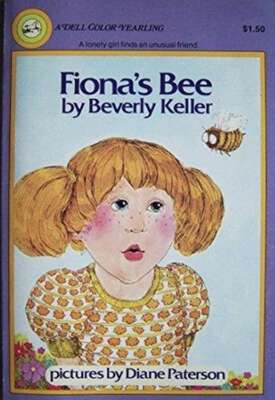
Young Fiona saves her money to buy a dog dish, which she puts on her front porch and fills with water every day, hoping to make friends with a dog who might stop by for a drink, and with its human walker. But when a bee lands in the water and nearly drowns, Fiona's rescue results in her making a whole group of new friends in an unexpected way. Beverly Keller's delightfully offbeat story nudges us to think about what kind of respect we owe to creatures like bees, what kinds of animals can be pets, and what the limits are, or should be, on keeping animals as pets.
-
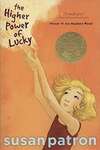
Higher Power of Lucky (2008) by Susan Patron
Maughn Gregory
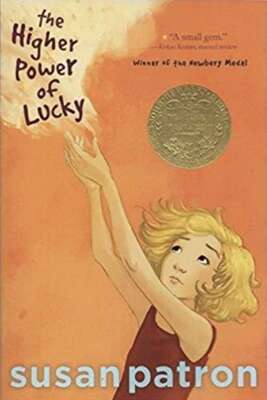
Ten-year-old Lucky lost her mother in a freak accident; her father is missing, and she is being cared for by her father’s former girlfriend in a tiny town at the edge of the Mojave desert. That could be the set-up for a story of loss and poverty. But this girl lives up to her name: she takes scraps of information, chance experiences, and overheard theories as resources for imagining the world and plotting her way forward. She learns how things work from the desert animals and insects, with the help of her hero, Charles Darwin. She learns survival and a good attitude from her quirky neighbors, becoming a first-rate self-educator and independent thinker.
-
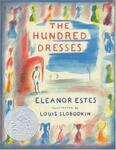
Hundred Dresses (1944) by Eleanor Estes
Peter Shea
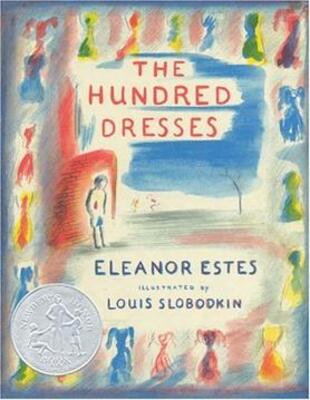
Wanda Petronski was a poor Polish girl who lived with her father and brother. She had only one dress to wear to school but told the other girls in her class that she had a hundred dresses at home. Disbelieving her, those girls teased Wanda continually, until she and her family eventually moved out of town. When the class learned that Wanda had won an art award in absentia, they regretted their teasing and sent her a letter of apology, which resulted in an intriguing gesture of reconciliation. Moral development involves the moral imagination, which requires thinking oneself into the lives of others. One of the best ways to develop one’s moral imagination is to read good literature like The Hundred Dresses and reflect on it.
-

My Octopus Teacher (2020) directed by Pippa Ehrlich and James Reed
Peter Shea
My Octopus Teacher combines a carefully structured love story with astonishing information about undersea life, documenting a year of encounters between a photographer and an octopus. It is important as a non-standard love story and as a reflection on the possibility of deep connection with non-human creatures.
-
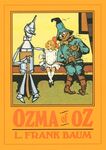
Ozma of Oz (1907) by L. Frank Baum
Maughn B. Gregory
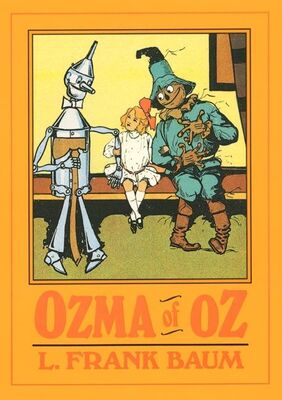
L. Frank Baum’s Ozma of Oz is a splendid tale of intellectual adventure full of thought experiments, including a tree that bears lunch boxes and napkins as fruit, beings like humans but with wheels at the ends of their four limbs, a mechanical man (called “Tiktok”) who can think, speak, and act but is not alive, and a princess with thirty alternative heads and accompanying temperaments. One could base a whole philosophy course on Ozma of Oz. One can also read it simply for fun – including, of course, philosophical fun.
-
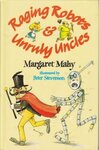
Raging Robots and Unruly Uncles (1981) by Margaret Mahy
Gareth B. Matthews
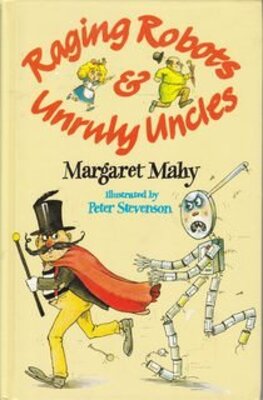
When, as a practical joke, the seven wicked sons of Wicked Jasper send a goody-goody robot named Lilly Rose Blossom to their virtuous cousin Prudence, daughter of their virtuous uncle Julian, she sends them a fiendishly insolent robot called the Nadger. Each household finds its robot so annoying that the cousins all run away from home and form a successful community together, eventually joined by a wiser Jasper and a chastened Julian. Though zany and wildly farcical, this story is also serious and thought-provoking – about the problem of minds and machines, the possibilities of free will, the nature of virtue and vice, and the purposes of education.
-
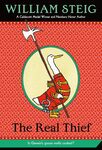
Real Thief (1973) by William Steig
Gareth B. Matthews
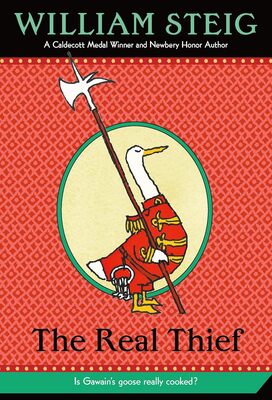
First, it is rubies that disappear from the Royal Treasury, then gold ducats, then the famous Kalikak diamond. King Basil, the bear, suspects Gawain, the goose, the Chief Guard of the Royal Treasury, who is brought to trial, found guilty, and sentenced to prison. But the mouse, Derek, a friend of Gawain, is the real thief. What should he do now? The philosophical value of Steig’s story extends even beyond the opportunity it affords for discussing what makes something right. Since much of the story is written from the thief’s point of view, reading it is an exercise in the moral imagination. Steig’s story is that rarity among children’s books—an exploration of moral questions that manages to be exciting and serious, without ever being moralistic.
-
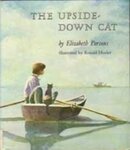
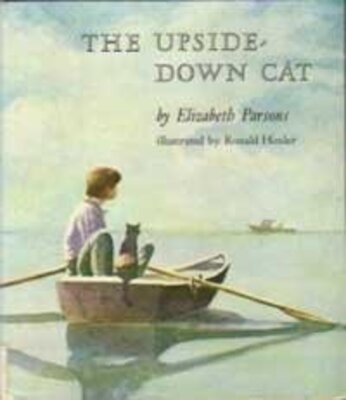
Upside-Down Cat (1981) Elizabeth Parsons
Maughn Gregory
Lily Black, nicknamed the “Upside-Down Cat” from her habit of lying on her back over a hot-air register to keep warm, lives with Joe and his parents in New York City and summers with them in Maine. When she disappears at the end of one summer, Joe and his family have no choice but to return to New York without her. A kind lobsterman finds Lily, takes care of her all winter, and becomes fond of her. The next summer, when Joe finds Lily on the man’s boat, they have to decide whom Lily really belongs to—if anyone.
Printing is not supported at the primary Gallery Thumbnail page. Please first navigate to a specific Image before printing.