

Files
Download Full Text (1.3 MB)
Description
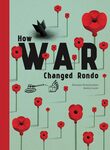
In this evocative picture book, ‘War’ is a proper name, referring not to an event but to a malevolent being, depicted as a gigantic, shape-shifting amalgamation of buildings, war machines, and a mechanical human arm from which emerge tanks with eyes and jagged mouths, mosquito-like helicopters, and other “terrible clinking and hissing machines.” Nor does War seem to have any goal or intention other than indiscriminate destruction. These images raise a number of important questions about the nature of large- and small-scale violence. Who-all is responsible? If war requires the participation of many people, how does that happen? Have you ever been part of a team, family, or group of friends that made you think, feel, say, or do things you would not have done on your own? Do our technologies ever use us, instead of us using them? Should we make laws against making and using certain kinds of weapons? In Rondo, three friends ask War to go away, but then speak to War “in its own language,” by hurling stones and nails at it. Each is wounded in the failed attempt. Is violence against the violent justifiable—on the playground or between countries? Is pacifism honorable? Does it depend on who is waging violence against whom, for what reasons? How War Changed Rondo presents opportunities for intergenerational philosophical inquiry into questions about violence and war that, tragically, are all too timely.
Publication Date
2022
Publisher
Institute for the Advancement of Philosophy for Children
City
Montclair
Keywords
children, philosophy for children, violence, war, pacifism
Disciplines
Early Childhood Education | Education | Philosophy
Recommended Citation
Gregory, Maughn Rollins, "How War Changed Rondo (2021) by Romana Romanyshyn and Andriy Lesiv" (2022). Picture Books. 46.
https://digitalcommons.montclair.edu/iapc_thinkingstories_picturebooks/46