

Files
Download Full Text (2.4 MB)
Description
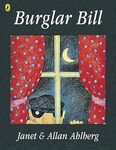
Burglar Bill lives alone with a house full of stolen property. Every night after supper he goes off to work, stealing things. Every dawn he comes home with his sack full of stolen goods and sits down to his breakfast of stolen toast and marmalade and stolen coffee. Some of my favorite children’s stories are written in a style I call “philosophical whimsy.” In the story of Burglar Bill, the whimsy is aimed at encouraging us to think about the life of a full-time thief as if it were an almost boringly normal sort of middleclass life. The story invites us to see thieves as wayward human beings, rather than as monsters or madmen. This message may strike some readers as sentimental. On the other hand, the demonization of criminality so common in our society keeps us from recognizing the humanity we share with thieves and helps us to ignore or disguise some of the darker motivations we might otherwise find within ourselves as well.
Publication Date
1995
Publisher
Institute for the Advancement of Philosophy for Children
City
Montclair
Keywords
burglars, family, philosophy for children, thieves, whimsy
Disciplines
Early Childhood Education | Education | Philosophy
Recommended Citation
Matthews, Gareth B., "Burglar Bill (1979) by Allan and Janet Ahlberg" (1995). Picture Books. 49.
https://digitalcommons.montclair.edu/iapc_thinkingstories_picturebooks/49
Comments
Original publication: Matthews, Gareth B. (1995) Review of Burglar Bill by Janet and Allan Ahlberg (London: Mammoth, 1989). Thinking: The Journal of Philosophy for Children 12(2): 1.