

Files
Download Full Text (7.7 MB)
Description
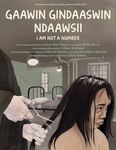
In the nineteenth and twentieth centuries American and Canadian government agencies and Christian churches established Indian residential schools where hundreds of thousands of children were “reeducated” in English and Christianity. They were not allowed to use their native languages or given names, to practice their religions, or to communicate with their siblings or parents. They were made to work in crop fields, kitchens, laundries, and industrial workshops. Many were physically and sexually abused. Many never saw their families again. The nine picture books reviewed here are accounts of survivors of residential schools from eight different Indigenous nations. In addition to depicting the violence attending these schools, the books show the courage and intelligent resilience of the resident children—inventing sign language to secretly communicate with each other, stealing food, and attempting escape. These books can help Indigenous families and descendants of settler colonizers explore this part of history in ways that may be uncomfortable but that will generate the kind of understanding of the past that can inform taking responsibility for the present and the future.
Publication Date
2026
Publisher
Institute for the Advancement of Philosophy for Children
City
Montclair
Keywords
assimilation, children, colonialism, education, Etuaptmumk, Indian residential schools, Indigenous people, sexual abuse
Disciplines
Early Childhood Education | Education | Philosophy
Recommended Citation
Gregory, Maughn Rollins, "I am Not a Number (2019) by Jenny Kay Dupuis and Kathy Kacer" (2026). Picture Books. 61.
https://digitalcommons.montclair.edu/iapc_thinkingstories_picturebooks/61