

Files
Download Full Text (1.9 MB)
Description
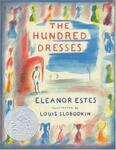
Wanda Petronski was a poor Polish girl who lived with her father and brother. She had only one dress to wear to school but told the other girls in her class that she had a hundred dresses at home. Disbelieving her, those girls teased Wanda continually, until she and her family eventually moved out of town. When the class learned that Wanda had won an art award in absentia, they regretted their teasing and sent her a letter of apology, which resulted in an intriguing gesture of reconciliation. Moral development involves the moral imagination, which requires thinking oneself into the lives of others. One of the best ways to develop one’s moral imagination is to read good literature like The Hundred Dresses and reflect on it.
Publication Date
2003
Publisher
Institute for the Advancement of Philosophy for Children
City
Montclair
Keywords
immigration, literature, moral development, moral imagination, teasing
Disciplines
Education | Philosophy
Recommended Citation
Shea, Peter, "Hundred Dresses (1944) by Eleanor Estes" (2003). Chapter Books. 9.
https://digitalcommons.montclair.edu/iapc_thinkingstories_chapterbooks/9
Comments
This review was originally published in https://digitalcommons.montclair.edu/thinking_journal_philosophy_children/26/">Thinking: The Journal of Philosophy for Children 16(3): 3, 2003.