
Another hard and important question confronts every young person growing up: given all the competing claims on my time, talent, and energy, what is my primary job? Which of these pressing issues and crises is my responsibility? How do I find a moral vocation, and how do I mediate between my moral ‘calling’ and other aspects of my life?
So, this section concerns the choices, responsibilities, and privileges of children and young adults in addressing pressing environmental policy issues.
Biographical accounts of children and young adult activists come to mind as starting points for this discussion. It seems important that such a collection include (1) political organizing and peaceful protest, and (2) acts of civil disobedience and intervention. It is a matter of serious philosophical concern to map the appropriate options for people too young to vote, and thus of no account in terms of current electoral politics. Clearly, all the centuries of political discussion about the claims that those without representation have on political institutions – the questions asked when this country began, and then during the Civil War and the suffrage movement – are particularly relevant to this issue. Children will have to live with irrevocable decisions; they surely have some claim to be part of those decisions. Here are some books to start these discussions.
-
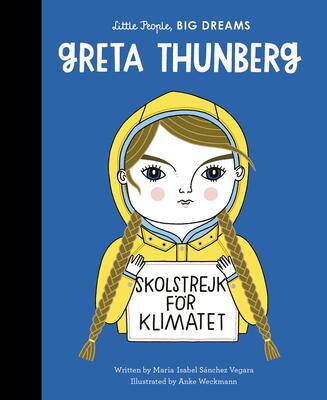
Greta Thunberg (2021) by Maria Isabel Sanchez Vegara
Maughn Rollins Gregory
Greta Thunberg learned about climate change in school at the age of eight, when she persuaded her parents to make lifestyle changes to reduce their carbon footprint. At fifteen, after winning a writing competition about the environment, she came up with the idea of a school strike, inspired by student walkouts in the United States to protest legislative inaction on gun control. Though she couldn’t interest anyone else in the idea, her one-child strikes soon gained international attention. Greta’s story demonstrates some of the challenges and gifts that neurodiverse children bring to activism. This book also prods adults to think of social change as children’s work, and to join them in strategizing and risk assessment.
-
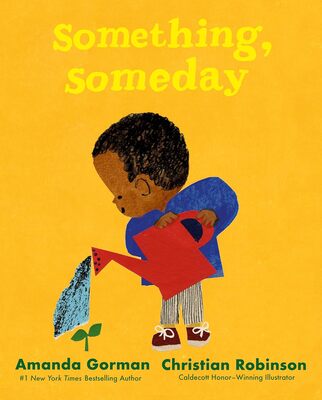
Something, Someday (2023) by Amanda Gorman
Maughn Rollins Gregory
When children think philosophically they inevitably will, and unquestionably should engage in social criticism. In this picture book by the first U.S. National Youth Poet Laureate Amanda Gorman, a Black child in an urban apartment complex surrounded by garbage cleans it up and plants a vegetable and flower garden, enlisting the help of others and overcoming some setbacks. Gorman's text warns children that some adults may say they're too small, or that it’s none of their business, or that what they're trying won’t work, but she reassures them that sometimes it’s OK to ignore those people.
-
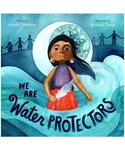
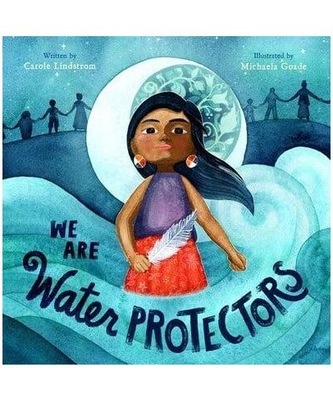
We Are Water Protectors (2020) by Carole Lindstrom
Peter Shea
We Are Water Protectors is a beautiful and partisan book, and the teacher or parent who wants to help children to think better could not find a better place to start, giving the child of whatever age the opportunity to feel the force of this plea, and then to recognize the need to understand the political context within which this issue arises, and the honest differences of opinion about policy that arise in an already disrupted world.
-
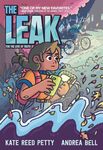
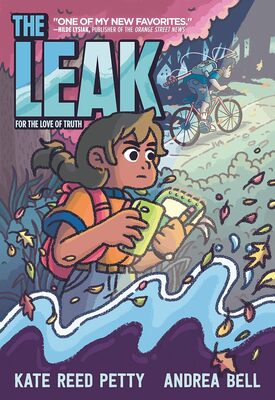
Leak (2021) by Kate Reed Petty
Maughn Rollins Gregory and Megan Jane Laverty
Aspiring 12-year-old journalist Ruth is looking for her next big story when she and her friend Jonathan discover dead fish and strange black slime at the lake near their town. Through a frustrating, risky, and sometimes funny journey, she learns about scientific and journalistic objectivity and the importance of both - and of community support - in environmental activism.
-
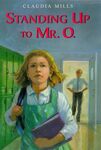
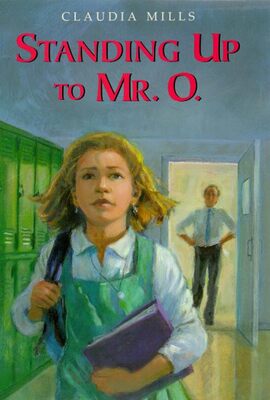
Standing Up to Mr. O. (1998) by Claudia Mills
Gareth B. Matthews
Fifth-grade Maggie's refusal to dissect a worm in science class is the first step on a philosophically-complicated path of moral awakening that will lead to conflict with her family, her friends, and her school. Claudia Mills’ middle-grades novel Standing Up to Mr. O. is an ideal text to introduce a discussion of moral issues concerning the treatment of animals. Almost all the points one would want to include in such a discussion are raised here, and they appear in a way that makes them immediately accessible both to teenagers and to their parents and teachers.