

It is a preoccupation of children’s literature at a very basic level, to see how one thing leads to another, to trace out connections of all sorts, to see what unifies a group of events or actors. One sees this “The Farmer in the Dell” and “The House that Jack Built” – models of a kind of connecting play. Some books about nature do a particularly interesting job of tracing out connections, and thus model a kind of thinking that might establish itself as a habit among a group of children: the habit of asking, “What is this connected to? How does this fit into some larger, meaningful web of relations?”
Here are some examples.
-
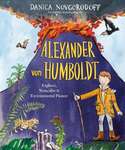
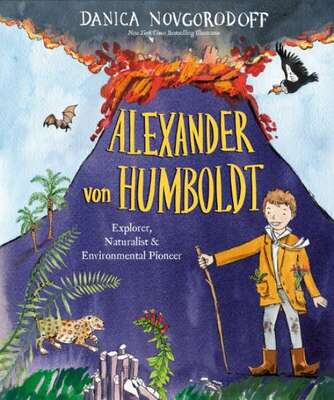
Alexander Von Humboldt: Explorer, Naturalist, and Environmental Pioneer (2019) by Danica Novgorodoff
Peter Shea
As a young boy, Alexander Von Humboldt came up with divergent questions about the birds and mountains and animals he saw, and brought all those questions together under two big questions that stayed important for him over a long life: “How are these things different?” and “How are they nevertheless connected?” As the reader watches Humboldt looking at a hawk and a mouse, volcanoes and farmland, palm trees and pine trees, Europe and Ecuador, Europeans and Indigenous people, one comes to expect what he will say: “They are different, and yet they are connected.” This idea is much bigger than “ecology”. For Humboldt, it was a key to making sense of experience generally. It’s is a way of thinking worth exploring in discussion: acknowledge difference, then find connection.
-
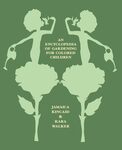
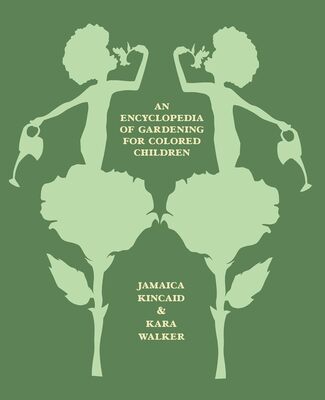
Encyclopedia of Gardening for Colored Children (2024) by Jamaica Kincaid
Maughn Rollins Gregory
In relating the origins, biological features, and uses of several familiar and unfamiliar plants, this Encyclopedia simultaneously offers a primer on colonialism, slavery, and genocide. Adults sharing this book with children should be led by children’s curiosity, but should also help them cultivate a vocabulary and historical understanding of oppression.
-

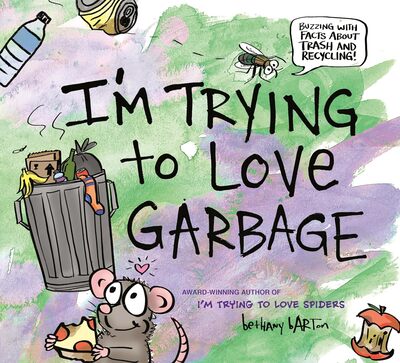
I'm Trying to Love Garbage (2021) by Bethany Barton
Peter Shea
Bethany Barton writes great books for kids about how minds change. In this one, the character’s arc is from thinking about garbage as just smelly icky stuff through empathizing (a little) with the creatures that feed on garbage, to eventually coming to see that all garbage is not equal; some needs special handling or it will clutter life up for a long time. The conclusion: I want to act like someone who thinks more about garbage, about what trash I create and where it ends up.”
-
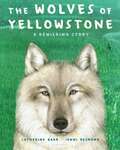
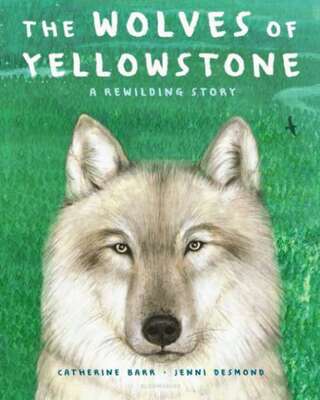
The Wolves of Yellowstone (2022) by Catherine Barr
Samantha Piede
When wolves were eliminated from Yellowstone National Park in the early 20th century, the park's ecosystem began to deteriorate, leading to elk overpopulation, overgrazing, and environmental collapse. The degradation of the park spawned a rewilding project, in which wolves from Canadian packs were reintroduced to the park. The process and effects of this rewilding is captured in Catherine Barr's The Wolves of Yellowstone, which takes on the philosophical complexity of not only ecological interconnection, but the ethical complications involved trying to restore a species that is not universally lauded by locals.