


-
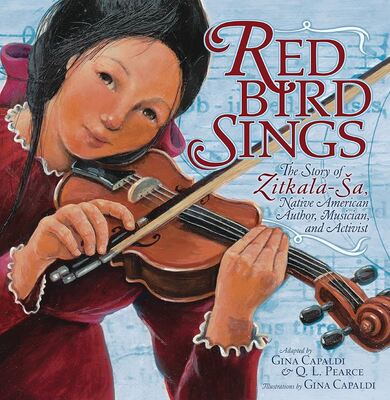
Red Bird Sings: The story of Zitkala-Ša (2011) by Gina Capaldi
Maughn Rollins Gregory
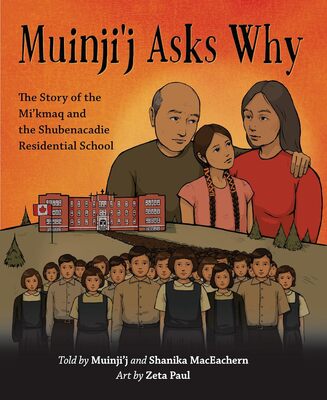
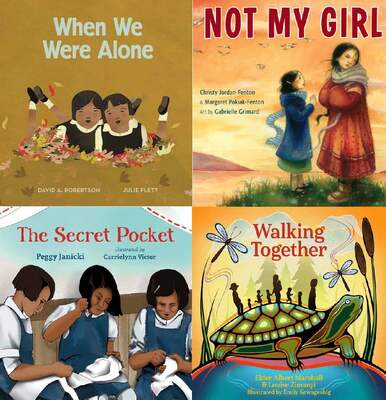
In the nineteenth and twentieth centuries American and Canadian government agencies and Christian churches established Indian residential schools where hundreds of thousands of children were “reeducated” in English and Christianity. They were not allowed to use their native languages or given names, to practice their religions, or to communicate with their siblings or parents. They were made to work in crop fields, kitchens, laundries, and industrial workshops. Many were physically and sexually abused. Many never saw their families again. The nine picture books reviewed here are accounts of survivors of residential schools from eight different Indigenous nations. In addition to depicting the violence attending these schools, the books show the courage and intelligent resilience of the resident children—inventing sign language to secretly communicate with each other, stealing food, and attempting escape. These books can help Indigenous families and descendants of settler colonizers explore this part of history in ways that may be uncomfortable but that will generate the kind of understanding of the past that can inform taking responsibility for the present and the future.
-
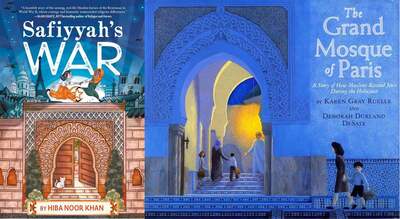
Safiyyah’ s War (2023) by Hiba Noor Khan & The Grand Mosque of Paris (2009) by Karen Gray Ruelle & Deborah Durland DeSaix
Maughn Rollins Gregory
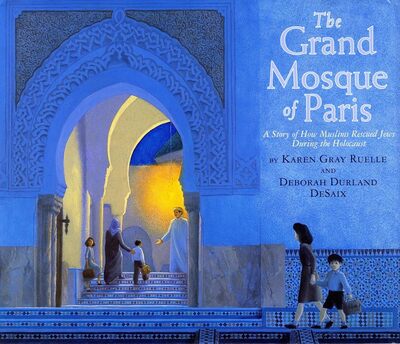
Suppose that somebody takes over your city and begins harming your friends and neighbors. How do you respond? When is it your responsibility to act, and what kinds of risks should you take? How do these new moral demands change your relations to your neighbors, people in authority, and even your family? How do you stay sane and resolved when your safety is under constant threat? Telling the story of how the Muslim community in Paris risked their lives to save hundreds of Jews when Germany invaded France in World War II, this middle-grades novel and picture book also tell about how adults and children find their way around and through many ethical and political quandaries.
-
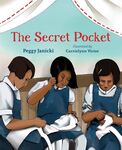
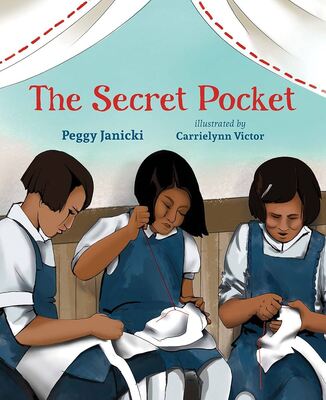
Secret Pocket (2023) by Peggy Janicki
Maughn Rollins Gregory
In the nineteenth and twentieth centuries American and Canadian government agencies and Christian churches established Indian residential schools where hundreds of thousands of children were “reeducated” in English and Christianity. They were not allowed to use their native languages or given names, to practice their religions, or to communicate with their siblings or parents. They were made to work in crop fields, kitchens, laundries, and industrial workshops. Many were physically and sexually abused. Many never saw their families again. The nine picture books reviewed here are accounts of survivors of residential schools from eight different Indigenous nations. In addition to depicting the violence attending these schools, the books show the courage and intelligent resilience of the resident children—inventing sign language to secretly communicate with each other, stealing food, and attempting escape. These books can help Indigenous families and descendants of settler colonizers explore this part of history in ways that may be uncomfortable but that will generate the kind of understanding of the past that can inform taking responsibility for the present and the future.
-
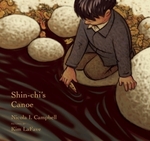
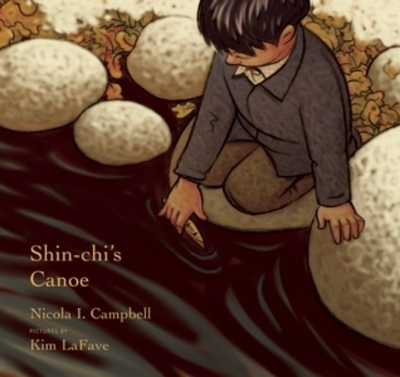
Shin-chi’s Canoe (2008) by Nicola Campbell
Maughn Rollins Gregory
In the nineteenth and twentieth centuries American and Canadian government agencies and Christian churches established Indian residential schools where hundreds of thousands of children were “reeducated” in English and Christianity. They were not allowed to use their native languages or given names, to practice their religions, or to communicate with their siblings or parents. They were made to work in crop fields, kitchens, laundries, and industrial workshops. Many were physically and sexually abused. Many never saw their families again. The nine picture books reviewed here are accounts of survivors of residential schools from eight different Indigenous nations. In addition to depicting the violence attending these schools, the books show the courage and intelligent resilience of the resident children—inventing sign language to secretly communicate with each other, stealing food, and attempting escape. These books can help Indigenous families and descendants of settler colonizers explore this part of history in ways that may be uncomfortable but that will generate the kind of understanding of the past that can inform taking responsibility for the present and the future.
-
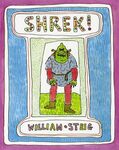
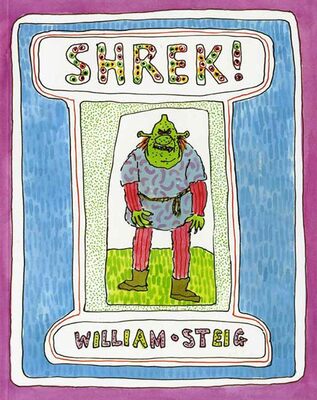
Shrek! (1990) by William Steig
Gareth B. Matthews
Shrek is a revoltingly ugly and repulsive ogre who, after a series of adventures, falls in love with an equally ugly princess. Many children have delighted in William Steig’s story of incredible ugliness and vulgar behavior--striking a blow for their own liberation against oppressive adult expectations. Why not actually discuss with them the way they (and many of us!) become fascinated with ugliness? Steig’s story also raises an important philosophical question about whether there can be anything genuinely attractive, even beautiful, that is also extremely ugly.
-
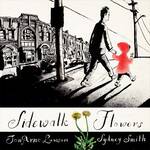
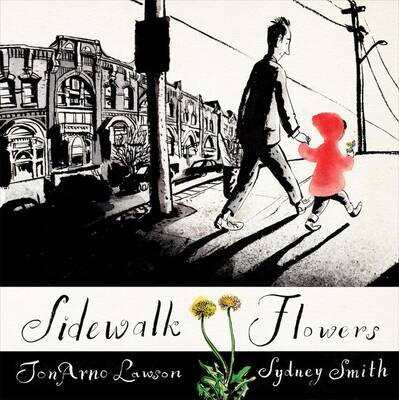
Sidewalk Flowers (2015) by JonArno Lawson
Samantha Piede
JonArno Lawson's Sidewalk Flowers centers on a little girl accompanying her father on a morning walk across a grey landscape. On the way, she spots dandelions sprouting out of the pavement. The protagonist's attention to this tiny, beautiful detail catalyzes her expanding appreciation for the rest of her environment, spurring her to notice beauty in unexpected places. This review suggests that Sidewalk Flowers richly introduces children to the philosophical theme of attention not with words, but with color.
-
![<em>Silan’s Box</em> [<em>Το κουτί του Σιλάν</em>] (2017) by Άλκηστη Χαλικιά [Alkistis Chalikia] by Maria Papathanasiou](https://digitalcommons.montclair.edu/iapc_thinkingstories_picturebooks/1050/thumbnail.jpg "<em>Silan’s Box</em> [<em>Το κουτί του Σιλάν</em>] (2017) by Άλκηστη Χαλικιά [Alkistis Chalikia] by Maria Papathanasiou")
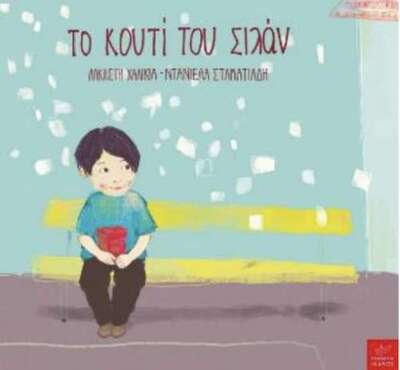
Silan’s Box [Το κουτί του Σιλάν] (2017) by Άλκηστη Χαλικιά [Alkistis Chalikia]
Maria Papathanasiou
Silan is an eight-year-old boy who was forced to leave his country and live in a new homeland, in Greece. He lives in a refugee center where he goes to a new school but does not speak the same language as the other children. He carries a little box with him—so precious that he keeps it with him constantly and does not share its contents with anyone. The children ask him every day about the contents of the box and try to guess what his hidden treasure might be. They think of what they would shield in their own box if they were in Silan’s place. This story prompts questions about refugees, migration, home and homeland. For children who have heard about contemporary wars, it also prompts questions about whether and how war is ever justified.
-
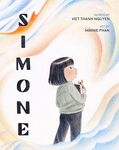
Simone (2024) by Viet Thanh Nguyen
Peter Shea
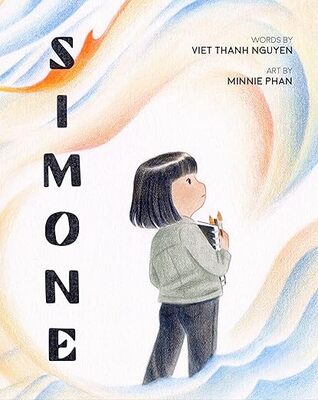
When Simone is awakened by her mom as a wildfire threatens their home, it is the beginning of a life-changing journey. Coziness and comfort disappear in an instant, without much warning, as wildfires threaten peaceful neighborhoods and families seek makeshift shelters, with little hope of going back to normal. Joined by other children sheltering in the gym, Simone, a budding artist, encourages everyone to draw as a way to process their situation.
-
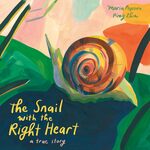
Snail with the Right Heart (2021) by Maria Popova
Maughn Rollins Gregory
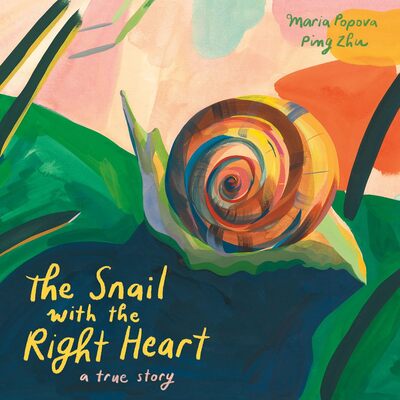
When a London scientist found a garden snail whose shell that spiraled left to right—opposite from others of its species—he sent it to the University of Nottingham for study. The snail’s internal organs were also arranged on the opposite side from other snails, including a heart on the right side of its body—a one-in-a-million condition known as situs inversus, which also occurs in humans. In explaining the snail’s story in terms of genetic evolution and biological reproduction, The Snail with the Right Heart also raises philosophical questions about the role of genetics, education, and personal choice in determining who we are, and about the ethics of accommodating and not accommodating genetic differences.
-
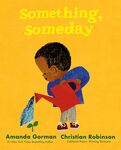
Something, Someday (2023) by Amanda Gorman
Maughn Rollins Gregory
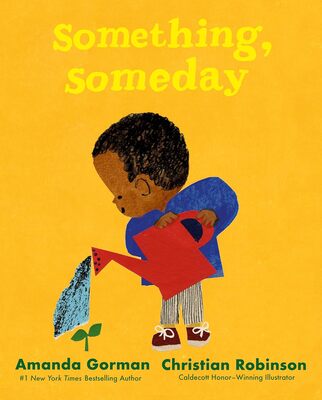
When children think philosophically they inevitably will, and unquestionably should engage in social criticism. In this picture book by the first U.S. National Youth Poet Laureate Amanda Gorman, a Black child in an urban apartment complex surrounded by garbage cleans it up and plants a vegetable and flower garden, enlisting the help of others and overcoming some setbacks. Gorman's text warns children that some adults may say they're too small, or that it’s none of their business, or that what they're trying won’t work, but she reassures them that sometimes it’s OK to ignore those people.
-
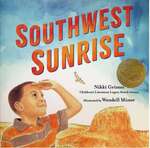
Southwest Sunrise (2020) by Nikki Grimes
Maughn Rollins Gregory
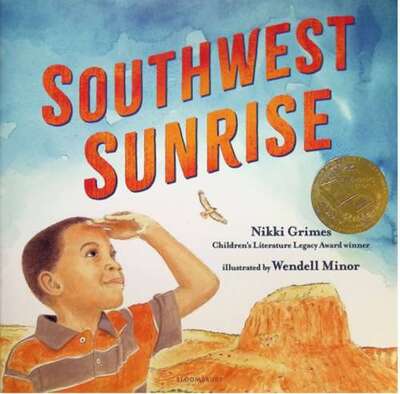
A genuine philosophical inquiry into the natural world has to begin with a genuine encounter with that world. In this arresting picture book by Nikki Grimes, a young boy named Jayden from New York City is forced into such an encounter when his parents relocate to the desert of New Mexico. This review focuses on suggestions the book offers for experiencing a natural landscape deeply, like slowing down, using all the senses, trying ‘beginner’s mind,’ making art, and using a field guide.
-
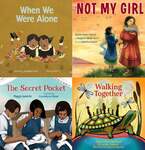
Stolen Childhood: Picture Book Stories of Indian Residential Schools
Maughn Rollins Gregory
In the nineteenth and twentieth centuries American and Canadian government agencies and Christian churches established Indian residential schools where hundreds of thousands of children were “reeducated” in English and Christianity. They were not allowed to use their native languages or given names, to practice their religions, or to communicate with their siblings or parents. They were made to work in crop fields, kitchens, laundries, and industrial workshops. Many were physically and sexually abused. Many never saw their families again. The nine picture books reviewed here are accounts of survivors of residential schools from eight different Indigenous nations. In addition to depicting the violence attending these schools, the books show the courage and intelligent resilience of the resident children—inventing sign language to secretly communicate with each other, stealing food, and attempting escape. These books can help Indigenous families and descendants of settler colonizers explore this part of history in ways that may be uncomfortable but that will generate the kind of understanding of the past that can inform taking responsibility for the present and the future.
-
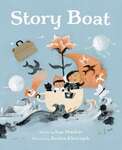
Story Boat (2020) by Kyo Maclear
Samantha Piede
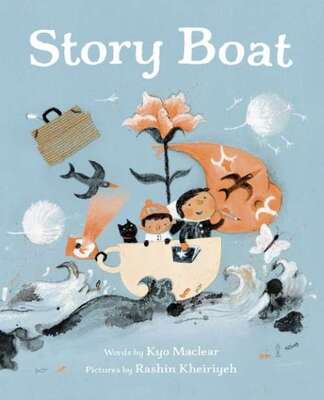
When the protagonist in Kyo Maclear’s Story Boat (2020) opens the book with “Here we are,” it is unclear to readers where exactly “here” might be. When safety must take precedence over familiarity, one develops a fleeting relationship with place. It is tempting, in stories like these, to emphasize the pain of the refugee experience: the uncertainty, the loss of one’s ‘heres’. But Maclear takes a different tack, giving readers the tools to focus on hope and wonder. Teachers may prompt students, in light of the book, to reflect on what they think a ‘home’ or a ‘here’ feels like – stable, certain, warm, safe – and what sorts of things in their lives, outside of ‘place,’ carry those same qualities: a memento, perhaps, or an activity or a ritual. By highlighting these possibilities in their own lives and hearing from others, students may recognize new ways to anchor themselves: an instrumental coping skill for anyone enduring a significant change.
-
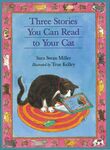
Three Stories You Can Read to Your Cat (1997) by Sara Swan Miller
Gareth B. Matthews
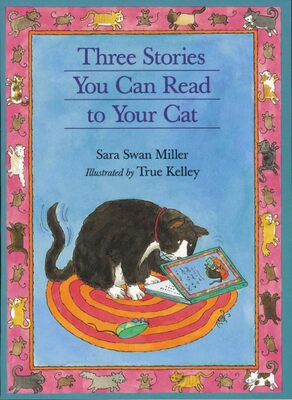
When a cat's human friend leaves the house and tells it to be good, the cat does many things it considers good, like shredding the curtains, eating a house plant, and digging into the garbage. In this review, originally published in Thinking: The Journal of Philosophy for Children 16(4), 2003, Gareth B. Matthews demonstrates that young children can understand and enjoy the irony of sarcasm. They also enjoy grappling with the story's philosophical irony: the problem of clarifying the difficult question of what makes an action good or bad.
-
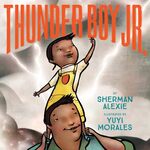
Thunder Boy Jr. (2016) by Sherman Alexie
Maughn Rollins Gregory
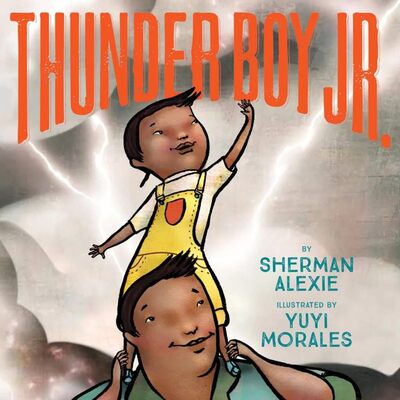
The uplift and the burden of a name given but not chosen are keenly felt by Thunder Boy Smith Jr., the young protagonist of this thought- and emotion-provoking picture book. Like most children at one time or another, Thunder Boy welcomes some aspects of the identity his name imposes on him and chafes against others. But unlike many of us, at any age, Thunder Boy reflects on his problem with a remarkable degree of self-knowledge and self-possession. And each of the reasons he gives for wanting a different name offers a moment for philosophical reflection.
-
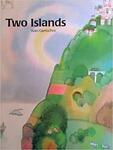
Two Islands (1985) by Ivan Gantschev
Gareth B. Matthews
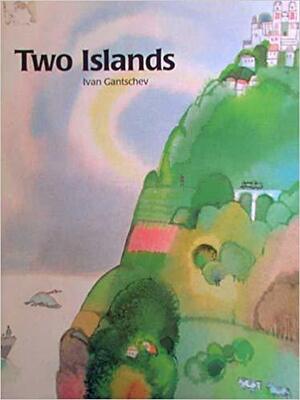
This is the story of two islands in the middle of the ocean: Greenel, whose citizens kept it fertile and green, and Graynel, whose citizens covered it with factories and skyscrapers. Citizens of Graynel wanted to vacation on Greenel and proposed to build a bridge between the islands, but the citizens of Greenel refused. Intending to force the bridge, citizens of Graynel stockpiled steel and cement and weapons on one end of the island, eventually causing it to tip on its edge and slide into the sea. While the moral of this modern fable is obvious – overarching human ambition, without regard to nature’s limitations, brings self-destruction – it can also open philosophical conversations about alternatives between pastoral Greenel and overdeveloped Graynel. Unlike children’s literature that is meant to socialize children to take their preordained places in society, this book is aimed at encouraging children to be social critics.
-
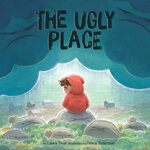
Ugly Place (2022) by Laura Deal
Samantha Piede
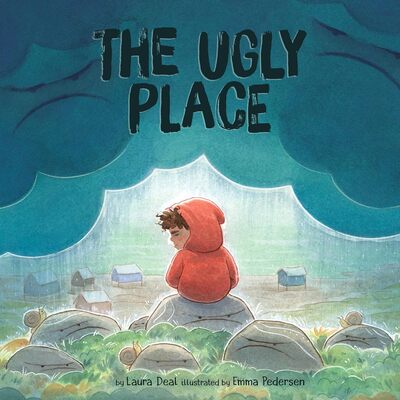
Many of us can recall moments when we were stopped dead in our tracks and experienced selfless awe – sometimes in nature, sometimes in art, sometimes in the beauty of another person. The inarticulacy of these moments may present an interesting philosophical struggle for both children and adults trying to capture these phenomena. Still, the recognition that these moments are possible – and ethically significant – presents opportunities for rich discussion. The Ugly Place highlights the importance of moments in which we are reminded that we are not, in fact, the center of the universe – for it is more vast and beautiful than our anxieties.
-
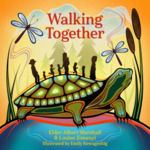
Walking Together (2023) by Elder Albert Marshall and Louise Zimanyi
Maughn Rollins Gregory
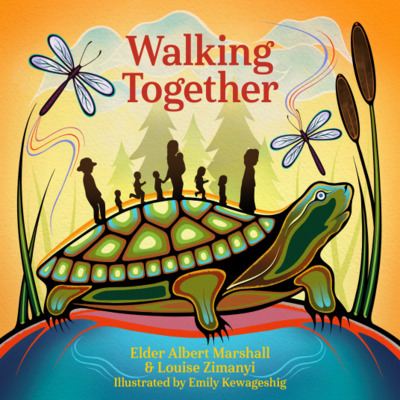
In the nineteenth and twentieth centuries American and Canadian government agencies and Christian churches established Indian residential schools where hundreds of thousands of children were “reeducated” in English and Christianity. They were not allowed to use their native languages or given names, to practice their religions, or to communicate with their siblings or parents. They were made to work in crop fields, kitchens, laundries, and industrial workshops. Many were physically and sexually abused. Many never saw their families again. The nine picture books reviewed here are accounts of survivors of residential schools from eight different Indigenous nations. In addition to depicting the violence attending these schools, the books show the courage and intelligent resilience of the resident children—inventing sign language to secretly communicate with each other, stealing food, and attempting escape. These books can help Indigenous families and descendants of settler colonizers explore this part of history in ways that may be uncomfortable but that will generate the kind of understanding of the past that can inform taking responsibility for the present and the future.
-
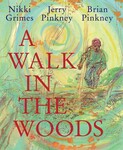
Walk in the Woods (2023) by Nikki Grimes
Maughn Rollins Gregory
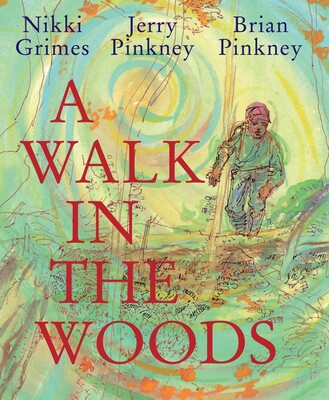
An unnamed Black boy walks in the woods near his home a week after his father’s funeral. Because the boy knows how to be mindful in nature—to move slowly, step carefully, and pay close attention—he becomes more connected to the woods and the creatures in it. Rediscovering is his father’s legacy of ecstatic, aesthetic reverence for nature begins to assuage the boy's anger-tinged grief.
-
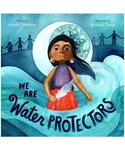
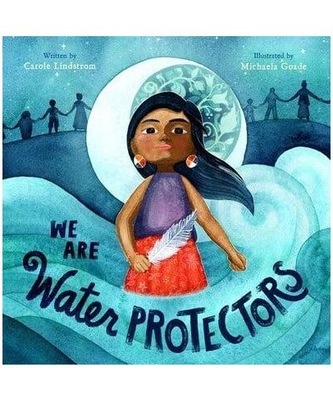
We Are Water Protectors (2020) by Carole Lindstrom
Peter Shea
We Are Water Protectors is a beautiful and partisan book, and the teacher or parent who wants to help children to think better could not find a better place to start, giving the child of whatever age the opportunity to feel the force of this plea, and then to recognize the need to understand the political context within which this issue arises, and the honest differences of opinion about policy that arise in an already disrupted world.
-
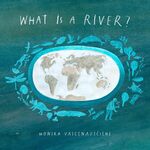
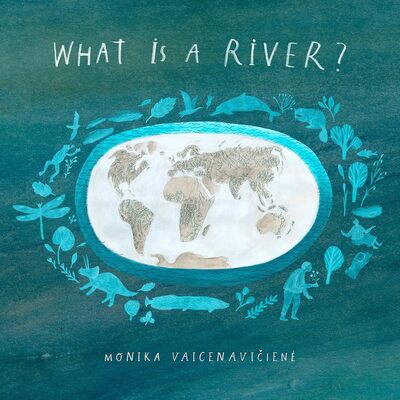
What is a River? (2021) by Monika Vaicenavičiene
Maughn Rollins Gregory
Monika Vaicenavičienė’s lush picture book What is a River? nudges us to contemplate our interconnection with living things and natural cycles, and with human history and culture. It relates a conversation between a grandmother and a young adult grandchild enjoying a picnic on a riverbank. Noticing that the river’s surface reflection of trees and flowers along its banks hides its lower depths (“Just like people”), the grandchild asks, “Grandma, what is a river?” The grandmother’s many responses do more than help her grandchild appreciate multiple meanings and values of rivers; they demonstrate how interesting some things become if we keep asking, “Is there anything else going on here?” or, in the grandmother's language, "What else is a river?”
-
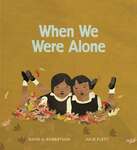
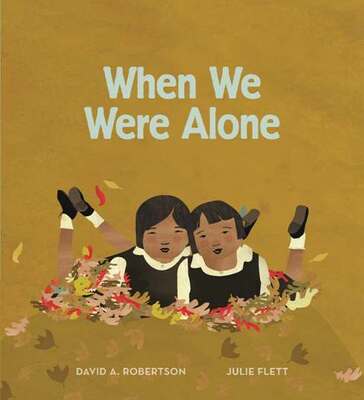
When We Are Alone (2016) by David A. Robertson
Maughn Rollins Gregory
In the nineteenth and twentieth centuries American and Canadian government agencies and Christian churches established Indian residential schools where hundreds of thousands of children were “reeducated” in English and Christianity. They were not allowed to use their native languages or given names, to practice their religions, or to communicate with their siblings or parents. They were made to work in crop fields, kitchens, laundries, and industrial workshops. Many were physically and sexually abused. Many never saw their families again. The nine picture books reviewed here are accounts of survivors of residential schools from eight different Indigenous nations. In addition to depicting the violence attending these schools, the books show the courage and intelligent resilience of the resident children—inventing sign language to secretly communicate with each other, stealing food, and attempting escape. These books can help Indigenous families and descendants of settler colonizers explore this part of history in ways that may be uncomfortable but that will generate the kind of understanding of the past that can inform taking responsibility for the present and the future.
-
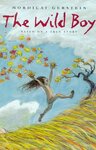
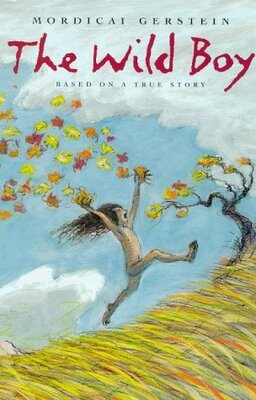
Wild Boy (1998) by Mordicai Gerstein
Gareth B. Matthews
Once there was a boy who lived alone, without a mother or father or any friends, in a forest in Southern France. He was naked. He didn’t even know what clothes were. He didn’t know he was a boy. He didn’t know what people were. He was wild. When a group of hunters discovered the boy, they delivered him to scientists in Paris, who eventually gave up trying to communicate with him. The boy was taken in by Dr. Itard and his housekeeper, Madame Guerin, who taught him to dress himself, to read and write simple words, and help around the house—though he never learned to speak. Mordicai Gerstein’s sensitively written and beautifully illustrated picture book about of the wild child of Aveyron, who was captured in Southern France two hundred years ago, invites us to ask ourselves who we are, what makes us human beings, and how we differ from nonhuman animals.
-
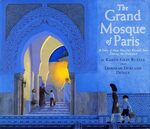
Grand Mosque of Paris (2009) by Karen Gray Ruelle & Deborah Durland DeSaix & Safiyyah’ s War (2023) by Hiba Noor Khan
Maughn Rollins Gregory
Suppose that somebody takes over your city and begins harming your friends and neighbors. How do you respond? When is it your responsibility to act, and what kinds of risks should you take? How do these new moral demands change your relations to your neighbors, people in authority, and even your family? How do you stay sane and resolved when your safety is under constant threat? Telling the story of how the Muslim community in Paris risked their lives to save hundreds of Jews when Germany invaded France in World War II, this middle-grades novel and picture book also tell about how adults and children find their way around and through many ethical and political quandaries.
-
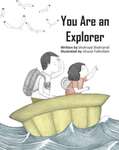
You Are an Explorer (2020) by Shahrzad Shahrjerdi
Farzaneh Shahrtash
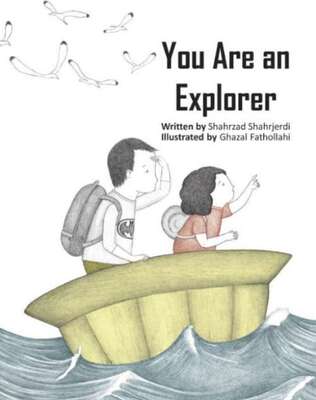
This beautifully illustrated book, with exaggerated pictures of two unprotected children, deals with the issue of post-war displacement of children and their families. While the parents of these two explorers are absent for an unknown reason, the older brother is taking care of the younger sister by his creative thinking. He is trying to use the power of his imagination based on care, as a technique to face seemingly unendurable and oppressive situations. The children who discuss You Are an Explorer may not have experienced a real war, may not have been in any post-war situations, and may not have experienced displacement. Perhaps they haven’t even been in contact with those who have been through any of these circumstances, but they can still explore some relevant concepts in this book, opening dialogue with their peers.
Printing is not supported at the primary Gallery Thumbnail page. Please first navigate to a specific Image before printing.