

-
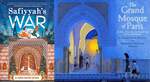
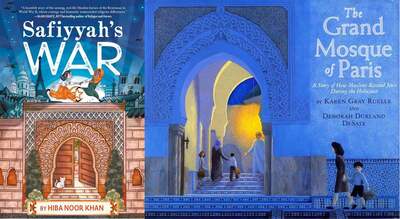
Safiyyah’ s War (2023) by Hiba Noor Khan & The Grand Mosque of Paris (2009) by Karen Gray Ruelle & Deborah Durland DeSaix
Maughn Rollins Gregory
Suppose that somebody takes over your city and begins harming your friends and neighbors. How do you respond? When is it your responsibility to act, and what kinds of risks should you take? How do these new moral demands change your relations to your neighbors, people in authority, and even your family? How do you stay sane and resolved when your safety is under constant threat? Telling the story of how the Muslim community in Paris risked their lives to save hundreds of Jews when Germany invaded France in World War II, this middle-grades novel and picture book also tell about how adults and children find their way around and through many ethical and political quandaries.
-
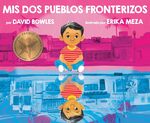
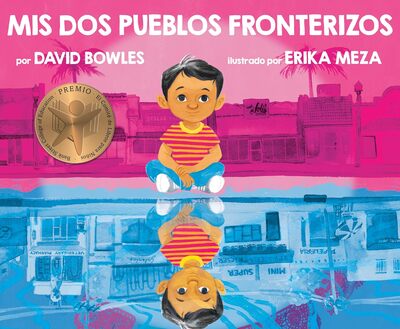
Mis Dos Pueblos Fronterizos / My Two Border Towns (2021) by David Bowles
Amy Reed-Sandoval
When children talk about migration and displacement, they generally speak and inquire about people. Why are some people forced to leave their homes—or why was I forced to leave my home? Why won’t other countries let them in—or why won’t other countries let my family and me in? What does it feel like to live in a shelter, or in a refugee camp, or on a bridge between two countries—or why must my family live this way, while others do not? This picture book shows how philosophical questions about migration can be inspired by, and embedded in, communities and characters that children can read, imagine, and care about. It emphasizes what young philosophers already know: that migrants are real people, living in real places, and embedded in real human relationships that are philosophically perplexing and deserving of collaborative analysis.
-
![<em>Silan’s Box</em> [<em>Το κουτί του Σιλάν</em>] (2017) by Άλκηστη Χαλικιά [Alkistis Chalikia] by Maria Papathanasiou](https://digitalcommons.montclair.edu/iapc_thinkingstories_picturebooks/1050/thumbnail.jpg "<em>Silan’s Box</em> [<em>Το κουτί του Σιλάν</em>] (2017) by Άλκηστη Χαλικιά [Alkistis Chalikia] by Maria Papathanasiou")
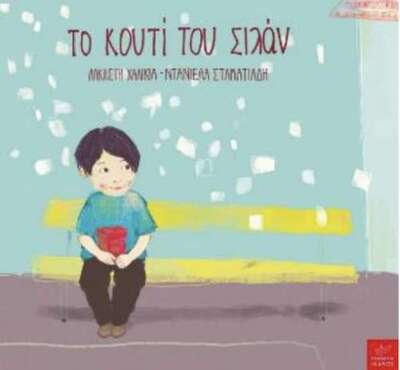
Silan’s Box [Το κουτί του Σιλάν] (2017) by Άλκηστη Χαλικιά [Alkistis Chalikia]
Maria Papathanasiou
Silan is an eight-year-old boy who was forced to leave his country and live in a new homeland, in Greece. He lives in a refugee center where he goes to a new school but does not speak the same language as the other children. He carries a little box with him—so precious that he keeps it with him constantly and does not share its contents with anyone. The children ask him every day about the contents of the box and try to guess what his hidden treasure might be. They think of what they would shield in their own box if they were in Silan’s place. This story prompts questions about refugees, migration, home and homeland. For children who have heard about contemporary wars, it also prompts questions about whether and how war is ever justified.
-
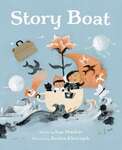
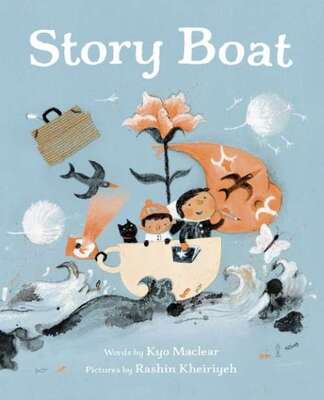
Story Boat (2020) by Kyo Maclear
Samantha Piede
When the protagonist in Kyo Maclear’s Story Boat (2020) opens the book with “Here we are,” it is unclear to readers where exactly “here” might be. When safety must take precedence over familiarity, one develops a fleeting relationship with place. It is tempting, in stories like these, to emphasize the pain of the refugee experience: the uncertainty, the loss of one’s ‘heres’. But Maclear takes a different tack, giving readers the tools to focus on hope and wonder. Teachers may prompt students, in light of the book, to reflect on what they think a ‘home’ or a ‘here’ feels like – stable, certain, warm, safe – and what sorts of things in their lives, outside of ‘place,’ carry those same qualities: a memento, perhaps, or an activity or a ritual. By highlighting these possibilities in their own lives and hearing from others, students may recognize new ways to anchor themselves: an instrumental coping skill for anyone enduring a significant change.
-
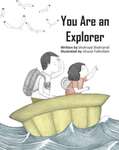
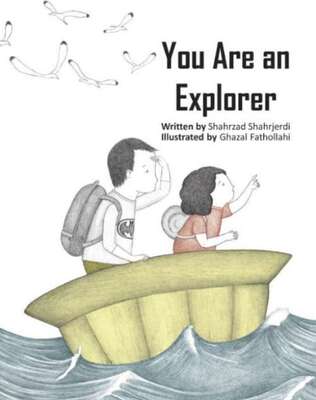
You Are an Explorer (2020) by Shahrzad Shahrjerdi
Farzaneh Shahrtash
This beautifully illustrated book, with exaggerated pictures of two unprotected children, deals with the issue of post-war displacement of children and their families. While the parents of these two explorers are absent for an unknown reason, the older brother is taking care of the younger sister by his creative thinking. He is trying to use the power of his imagination based on care, as a technique to face seemingly unendurable and oppressive situations. The children who discuss You Are an Explorer may not have experienced a real war, may not have been in any post-war situations, and may not have experienced displacement. Perhaps they haven’t even been in contact with those who have been through any of these circumstances, but they can still explore some relevant concepts in this book, opening dialogue with their peers.
Printing is not supported at the primary Gallery Thumbnail page. Please first navigate to a specific Image before printing.