

When I was young, my uncle destroyed a forest on his land, to extend his plowing. It seemed a shame, but I couldn’t say how it was wrong. The land was his, and no one else was using it. Did the land itself, or the animals and plants on it, have rights, or was the forest in some way sacred? That question stays with me, for all the interesting spaces I know that could easily be paved over or plowed or somehow sabotaged. It extends now to species, natural ways of life, that could be made extinct.
In my uncle’s later life, he devoted time and resources to preserving a native sacred site on his property from a dam project which he believed to be unnecessary, financing a legal battle all the way to the North Dakota Supreme Court. That modeled a different idea about people’s relationship to the land and a different kind of responsibility.
In this category, as in some previous groupings, the works available form a continuum, a range of different relationships between human beings and natural spaces and systems. We hope that, as this bibliography matures, we can find depictions and explanations of relationships that go beyond familiar distinctions to take account of cultures for which the line between humans and nature is not important, or is imagined in surprising ways.
Here are some of the kinds of relationships depicted in these books: (1) Defense/conservation – preserving what is important or essential. (2) Exploitation – subordinating the purposes and integrity of natural systems to human projects and goals. (3) Consequences of climate change and environmental degradation. (4) Non-exploitative relationships: Gardens, Agriculture, Pets, and Domesticated Animals.


-
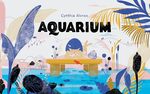
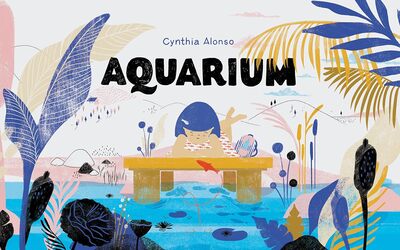
Aquariam (2018) by Cynthia Alonso
Samantha Piede
When the protagonist of Cynthia Alonso's Aquarium discovers a small, orange fish has splashed onto her neighborhood pier, she delightedly attempts to realize her dream of living amongst marine life. She decides to build a new home for it -- a human-sized aquarium -- in her living room. However, her earnestness is not enough to make this space a true home for the fish. Samantha Piede's Thinking in Stories review highlights several ethical and epistemological questions raised by this wordless narrative. What can we know of the needs and desires of species other than our own? What are the ethical ramifications of presuming animals want the same things we do?
-
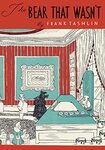
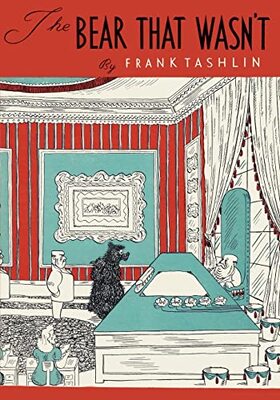
Bear that Wasn't (1946/2010) by Arthur Frank Tashlin
Gareth B. Matthews
What happens when a bear wakes from hibernation to find his forest home has been replaced by a human factory? What if the bear can't convince the factory workers, vice presidents, or president that he is, in deed, a bear and shouldn't be put to work in the factory? In reviewing Frank Tashlin's The Bear that Wasn't, Gareth B. Matthews discovers philosophical themes including dreaming and skepticism, being and nonbeing, appearance and reality, and the foundations of knowledge.
-
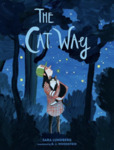
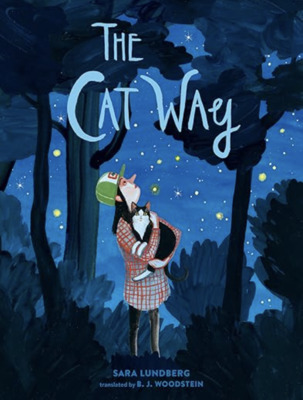
Cat Way (2024) by Sara Lundberg
Maughn Rollins Gregory
When a human gives her cat a turn to lead the way on their daily walk, they encounter the unexpected. The philosophical quandaries this story raises – When do routines become too confining? How do domestic habits prevent us from experiencing the natural world? Can humans and pets have genuinely inter-species relationships? – can be discussed and experimented with by people of most ages.
-
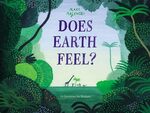
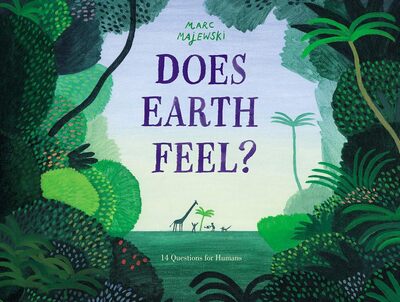
Does Earth Feel? (2021) by Marc Majewski
Alaina Gostomski
With spare prose and evocative paintings, author-illustrator Marc Majewski asks fourteen critical questions -- including Does Earth feel calm? Does Earth feel curious? Does Earth feel hurt? Does Earth feel heard? -- to encourage active thinking and discussion about our planet.
-
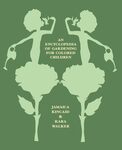
Encyclopedia of Gardening for Colored Children (2024) by Jamaica Kincaid
Maughn Rollins Gregory
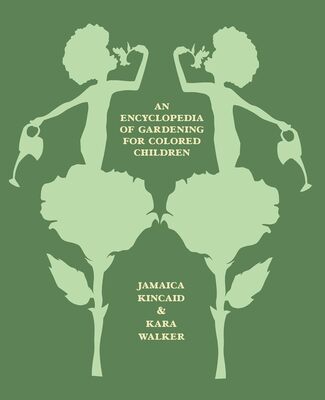
In relating the origins, biological features, and uses of several familiar and unfamiliar plants, this Encyclopedia simultaneously offers a primer on colonialism, slavery, and genocide. Adults sharing this book with children should be led by children’s curiosity, but should also help them cultivate a vocabulary and historical understanding of oppression.
-
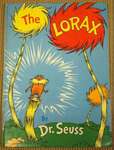
Lorax (1971) by Dr. Seuss
Megan Jane laverty
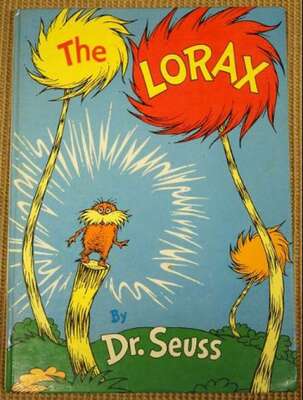
Megan Jane Laverty interprets Dr. Seuss’s The Lorax (the 1971 book, the 1972 television cartoon, and the 2012 feature film) as a multi-layered philosophical fable. First, she examines how the story reveals the dangers of our enthusiastic but short-sighted pursuit of innovation, success, and wealth—ambitions that can lead to far-reaching and often tragic consequences. Secondly, she explores how the narrative vividly illustrates the environmental devastation that results when commercial enterprises treat nature as an inexhaustible resource for production and progress. Laverty proposes several ways for students to engage with the story’s philosophical themes, including the aesthetic exploration of their local environment, intergenerational dialogue, and critical discussion of the book’s two central moral lessons.
-

Possum that Didn't (1950/2016) by Arthur Frank Tashlin
Maughn Rollins Gregory and Peter Shea
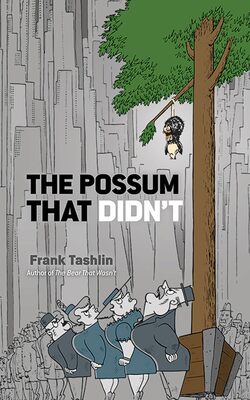
The possum ‘that didn’t’ is a very contented animal who smiles in sunshine and rain, but when a group of human picnickers spot him hanging by his tail, they read his smile as a frown and call him stupid for insisting that he is happy. They decide to take him to the city to find amusement and, because he won’t climb down from the tree, they excavate it and transport tree and hanging possum together. Frank Tashlin's book goes philosophical in two different directions. One is the direction of satire: We laugh at humans taking a possum to a nightclub, but what do we really know about animal happiness? The other direction is existential: from the perspective of the possum, it dramatize the question: What do I do when I'm understood backwards over and over again—when the world I thought I lived in becomes unrecognizable?
-
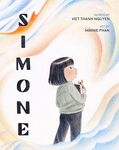
Simone (2024) by Viet Thanh Nguyen
Peter Shea
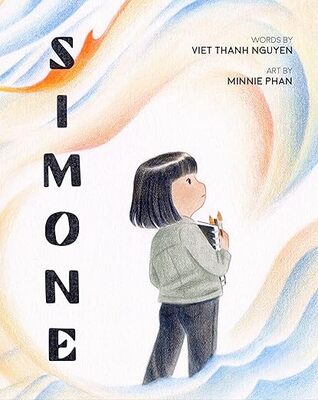
When Simone is awakened by her mom as a wildfire threatens their home, it is the beginning of a life-changing journey. Coziness and comfort disappear in an instant, without much warning, as wildfires threaten peaceful neighborhoods and families seek makeshift shelters, with little hope of going back to normal. Joined by other children sheltering in the gym, Simone, a budding artist, encourages everyone to draw as a way to process their situation.
-
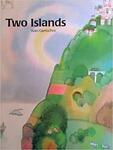
Two Islands (1985) by Ivan Gantschev
Gareth B. Matthews
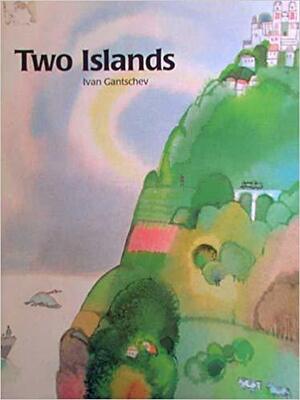
This is the story of two islands in the middle of the ocean: Greenel, whose citizens kept it fertile and green, and Graynel, whose citizens covered it with factories and skyscrapers. Citizens of Graynel wanted to vacation on Greenel and proposed to build a bridge between the islands, but the citizens of Greenel refused. Intending to force the bridge, citizens of Graynel stockpiled steel and cement and weapons on one end of the island, eventually causing it to tip on its edge and slide into the sea. While the moral of this modern fable is obvious – overarching human ambition, without regard to nature’s limitations, brings self-destruction – it can also open philosophical conversations about alternatives between pastoral Greenel and overdeveloped Graynel. Unlike children’s literature that is meant to socialize children to take their preordained places in society, this book is aimed at encouraging children to be social critics.
-
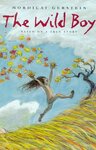
Wild Boy (1998) by Mordicai Gerstein
Gareth B. Matthews
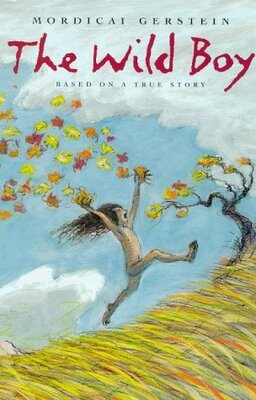
Once there was a boy who lived alone, without a mother or father or any friends, in a forest in Southern France. He was naked. He didn’t even know what clothes were. He didn’t know he was a boy. He didn’t know what people were. He was wild. When a group of hunters discovered the boy, they delivered him to scientists in Paris, who eventually gave up trying to communicate with him. The boy was taken in by Dr. Itard and his housekeeper, Madame Guerin, who taught him to dress himself, to read and write simple words, and help around the house—though he never learned to speak. Mordicai Gerstein’s sensitively written and beautifully illustrated picture book about of the wild child of Aveyron, who was captured in Southern France two hundred years ago, invites us to ask ourselves who we are, what makes us human beings, and how we differ from nonhuman animals.
-
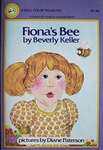
Fiona’s Bee (1975) by Beverly Keller
Gareth B. Matthews
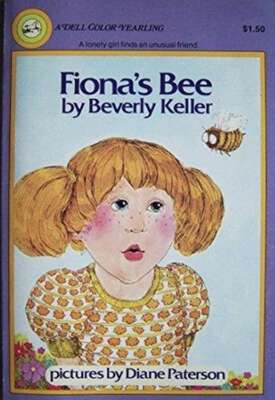
Young Fiona saves her money to buy a dog dish, which she puts on her front porch and fills with water every day, hoping to make friends with a dog who might stop by for a drink, and with its human walker. But when a bee lands in the water and nearly drowns, Fiona's rescue results in her making a whole group of new friends in an unexpected way. Beverly Keller's delightfully offbeat story nudges us to think about what kind of respect we owe to creatures like bees, what kinds of animals can be pets, and what the limits are, or should be, on keeping animals as pets.
-
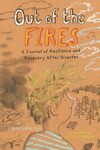
Out of the Fires (2023) by Carrie Lara
Peter Shea
After a fire destroys his home and neighborhood, a young boy must learn what it means to be resilient. Things may never be "normal" again, but he discovers that he is strong―even when hard things happen. The book, written as a journal, includes drawings, news clippings, and coping strategies to help children cultivate resilience after a natural disaster.
-
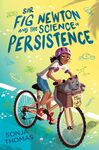
Sir Fig Newton and the Science of Persistence (2023) by Sonja Thomas
Maughn Rollins Gregory
When twelve-year-old Mira Williams’s companion and confidant, the cat Sir Fig Newton, contracts diabetes, her parents say she may have to give him to someone who can afford his treatment. The resources Mira will need to save Fig and keep him close include ingenuity, family ties, friendships, and the kind of faith she finds can be compatible with science. Thomas’ novel shows a teenager’s sophisticated engagement with complex questions of race, faith, science, and relationships.
-
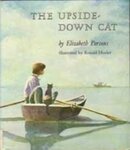
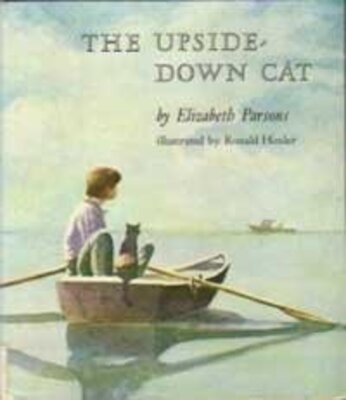
The Upside-Down Cat (1981) Elizabeth Parsons
Maughn Gregory
Lily Black, nicknamed the “Upside-Down Cat” from her habit of lying on her back over a hot-air register to keep warm, lives with Joe and his parents in New York City and summers with them in Maine. When she disappears at the end of one summer, Joe and his family have no choice but to return to New York without her. A kind lobsterman finds Lily, takes care of her all winter, and becomes fond of her. The next summer, when Joe finds Lily on the man’s boat, they have to decide whom Lily really belongs to—if anyone.