
-
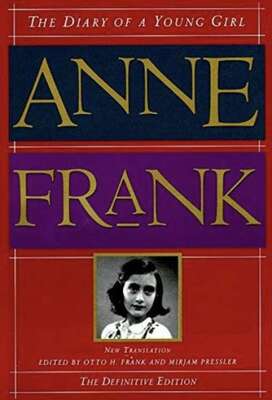
Anne Frank: The Diary of a Young Girl (1947/1991) by Anne Frank
Alona Kharina
We can take Anne Frank’s book as an example of the accumulation and release of the trauma caused by adverse events, through conversation with ourselves, our shadow side. We can also take it as an example of forgiveness. It is possible for us, as readers, to witness life in a meager room during the war, without any external contacts. We observe Anne’s mental maturation and hear testimonies of unfriendly love for her mother and painful love for her father. Her memoir is an opportunity to explore issues of morality, faith, hope, and freedom, through the prism of the tragic experiences of one family—like so many families fleeing war today, to survive.
-
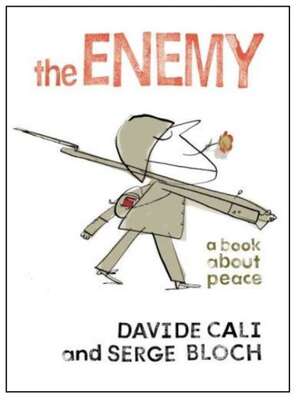
Enemy: A Book About Peace (2007) by Davide Cali;
Maria Zbroy
Every person, society, and ethnic community builds its worldview on the basis of comparing in-group and out-group, the boundaries of which are variable. The one who seems closest to us may be a complete stranger. And someone who comes from afar, who belongs to a completely different community or nation, can become the closest person. Only we determine who is our friend and who is our enemy. In Davide Cali’s allegory about modern warfare and other kinds of conflict, two soldiers who have never seen each other shoot at each other from inside their trenches until one decides to take a daring chance.
-
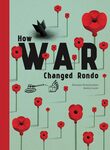
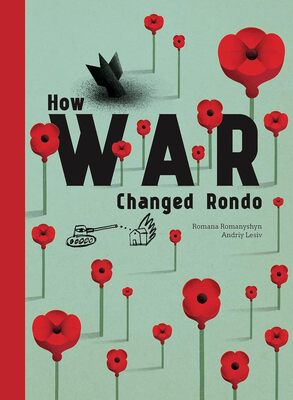
How War Changed Rondo (2021) by Romana Romanyshyn and Andriy Lesiv
Maughn Rollins Gregory
In this evocative picture book, ‘War’ is a proper name, referring not to an event but to a malevolent being, depicted as a gigantic, shape-shifting amalgamation of buildings, war machines, and a mechanical human arm from which emerge tanks with eyes and jagged mouths, mosquito-like helicopters, and other “terrible clinking and hissing machines.” Nor does War seem to have any goal or intention other than indiscriminate destruction. These images raise a number of important questions about the nature of large- and small-scale violence. Who-all is responsible? If war requires the participation of many people, how does that happen? Have you ever been part of a team, family, or group of friends that made you think, feel, say, or do things you would not have done on your own? Do our technologies ever use us, instead of us using them? Should we make laws against making and using certain kinds of weapons? In Rondo, three friends ask War to go away, but then speak to War “in its own language,” by hurling stones and nails at it. Each is wounded in the failed attempt. Is violence against the violent justifiable—on the playground or between countries? Is pacifism honorable? Does it depend on who is waging violence against whom, for what reasons? How War Changed Rondo presents opportunities for intergenerational philosophical inquiry into questions about violence and war that, tragically, are all too timely.
-
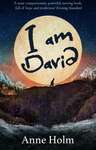
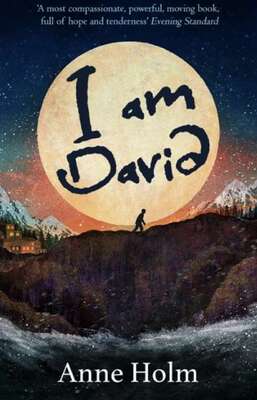
I am David (Jeg er David) (1965) by Anne Holm
Lena Green
David, who seems to have been the only child in a men’s prison camp, grew up without family or history and knows nothing about any other kind of human society, except what he learns from the adult prisoners and what he observes after he escapes. His experiences, and the questions he wonders about, encourage exploration of concepts such as family, belonging, identity, freedom, goodness, evil, resilience, language, and education. This book can be considered a philosophical novel for children. Though somewhat dated, it remains a gripping account of a child on the verge of adolescence responding to adversity with courage and hope.
-
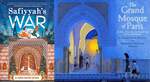
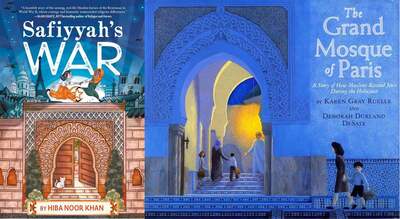
Safiyyah’ s War (2023) by Hiba Noor Khan & The Grand Mosque of Paris (2009) by Karen Gray Ruelle & Deborah Durland DeSaix
Maughn Rollins Gregory
Suppose that somebody takes over your city and begins harming your friends and neighbors. How do you respond? When is it your responsibility to act, and what kinds of risks should you take? How do these new moral demands change your relations to your neighbors, people in authority, and even your family? How do you stay sane and resolved when your safety is under constant threat? Telling the story of how the Muslim community in Paris risked their lives to save hundreds of Jews when Germany invaded France in World War II, this middle-grades novel and picture book also tell about how adults and children find their way around and through many ethical and political quandaries.
-
![<em>Silan’s Box</em> [<em>Το κουτί του Σιλάν</em>] (2017) by Άλκηστη Χαλικιά [Alkistis Chalikia] by Maria Papathanasiou](https://digitalcommons.montclair.edu/iapc_thinkingstories_picturebooks/1050/thumbnail.jpg "<em>Silan’s Box</em> [<em>Το κουτί του Σιλάν</em>] (2017) by Άλκηστη Χαλικιά [Alkistis Chalikia] by Maria Papathanasiou")
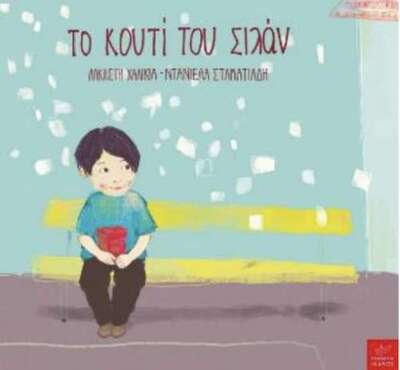
Silan’s Box [Το κουτί του Σιλάν] (2017) by Άλκηστη Χαλικιά [Alkistis Chalikia]
Maria Papathanasiou
Silan is an eight-year-old boy who was forced to leave his country and live in a new homeland, in Greece. He lives in a refugee center where he goes to a new school but does not speak the same language as the other children. He carries a little box with him—so precious that he keeps it with him constantly and does not share its contents with anyone. The children ask him every day about the contents of the box and try to guess what his hidden treasure might be. They think of what they would shield in their own box if they were in Silan’s place. This story prompts questions about refugees, migration, home and homeland. For children who have heard about contemporary wars, it also prompts questions about whether and how war is ever justified.
-
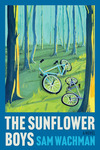
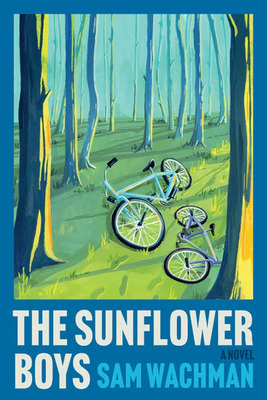
Sunflower Boys (2025) by Sam Wachman
Maughn Rollins Gregory
Two issues preoccupy twelve-year-old Artem, living with his mother and younger brother Yuri in Chernihiv, Ukraine. He must navigate adolescence without the direct guidance of his father, who works construction in New York, USA, and his feelings for his best friend Viktor are shifting in a way he knows he must hide. But Artem’s coming-of-age story is interrupted by the invasion of the Russian army on February 24, 2022. Making their way across war-torn Ukraine toward the Polish border in hopes of reuniting with their father, the brothers experience hunger, severe illness, and the terror of witnessing the murder of family members. The Sunflower Boys draws on accounts of young Ukrainians author Sam Wachman taught in refugee settlements, who asked him to tell their story. The novel prompts many kinds of moral reckoning: What can we do to counteract human-on-human brutality in the small spheres of ordinary experience? How can we (including children and young people) as citizens raise our voices in ways that might summon political intervention to defend the defenseless?
-
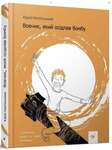
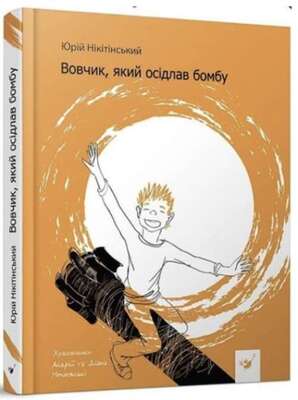
Vovchyk who Rode a Bomb (2019) by Yuri Nikitinsky
Hanna Klymenko-Syniook
Today some people have been denied the feeling of safety; others have lost their families, homes, and even the towns, and villages of their local homeland. Many now find themselves in occupied towns, and many more have been forced to move into the unknown, in search of the refuge provided by relatively safe regions, or abroad. And how many have been compelled to escape a second time to save their children? In the humorous and tragic story “Vovchyk who rode a bomb” and the philosophical adventure story “If Bodya were here,” Nikitinsky depicts war as it is seen by children, and in the language of children. I advise parents and children to read this book together—not because it is frightening and painful, but because the joint experience is valuable in a time of insecurity in a fragile world.
Printing is not supported at the primary Gallery Thumbnail page. Please first navigate to a specific Image before printing.